Loading...

newsTicker.loading • newsTicker.loading
newsTicker.loading • newsTicker.loading
Loading...
Arthur Rahman
EcoBangla Correspondent
November 6, 2025
189
0
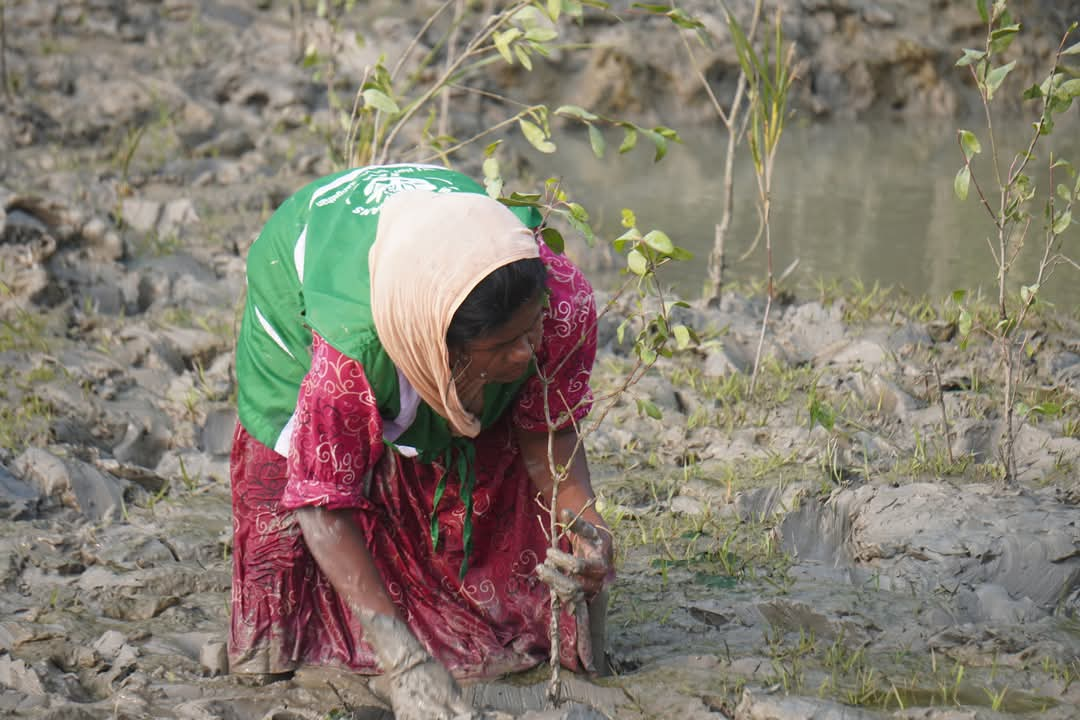
This isn't just tree planting. It's women taking direct action to protect their communities from cyclones, storm surges, and coastal erosion. It's climate resilience built by those who understand the threats most intimately because they live them daily. The images tell a powerful story: women in traditional dress, working together in coastal mudflats, carefully planting young mangrove saplings that will grow into protective barriers. Their labor today becomes tomorrow's shield against nature's fury and rising seas
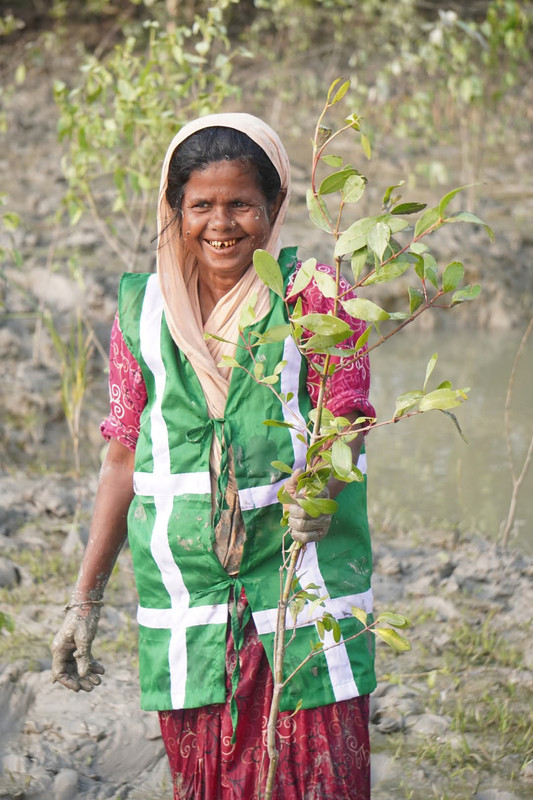
The Empower: Women for Climate Resilient Societies–II project recognizes a fundamental truth: women in coastal Bangladesh bear disproportionate impacts from climate change yet are often excluded from decision-making and climate action. BINDU is changing this equation by placing women at the center of resilience-building efforts. Why mangroves matter for Satkhira: The district faces severe climate vulnerabilities including frequent cyclones and storm surges from the Bay of Bengal, coastal erosion destroying homes and farmland, saltwater intrusion ruining agricultural soil and drinking water, and sea level rise threatening entire communities. Mangrove forests serve as natural barriers against these threats, absorbing storm energy, stabilizing coastlines, filtering saltwater, and providing habitat for fish and wildlife that support local livelihoods. The Bayanokora Sluice Gate location is strategically important. Sluice gates control water flow between rivers and agricultural areas, protecting farmland from saltwater while managing drainage. The embankment alongside this infrastructure is perfect for mangrove planting – the trees will stabilize the structure, reduce erosion, and create a protective buffer zone. 500 mangrove trees may seem modest, but each tree represents significant impact. As they mature over 3-5 years, these mangroves will create dense root systems holding soil together, canopies breaking wind and wave force, breeding grounds for fish and crabs providing food and income, and carbon storage mitigating climate change. The 233-foot stretch is a demonstration project – proof that community-led mangrove restoration works and can be scaled up along Satkhira's vulnerable coastline. Women's participation transforms the project from environmental work to empowerment. The local women involved gain environmental knowledge and skills applicable to other resilience efforts, income from project participation and potentially from mangrove resources like fish and honey, leadership experience in community environmental projects, visibility as climate actors rather than passive victims, and collective strength through working together on shared goals. Community ownership ensures sustainability. When local women plant and care for these trees, they have personal investment in their survival. Unlike top-down projects where outsiders plant and leave, community-led initiatives create ongoing stewardship. These women will monitor the saplings, protect them from damage, and ensure their growth – because the trees protect their homes and families. BINDU's approach integrates multiple dimensions of resilience. Beyond tree planting, the Empower project includes climate education helping women understand risks and adaptation strategies, livelihood diversification reducing dependence on climate-vulnerable income sources, disaster preparedness training for cyclones and flooding, advocacy skills enabling women to voice concerns to local authorities, and networking connecting women across coastal communities facing similar challenges.
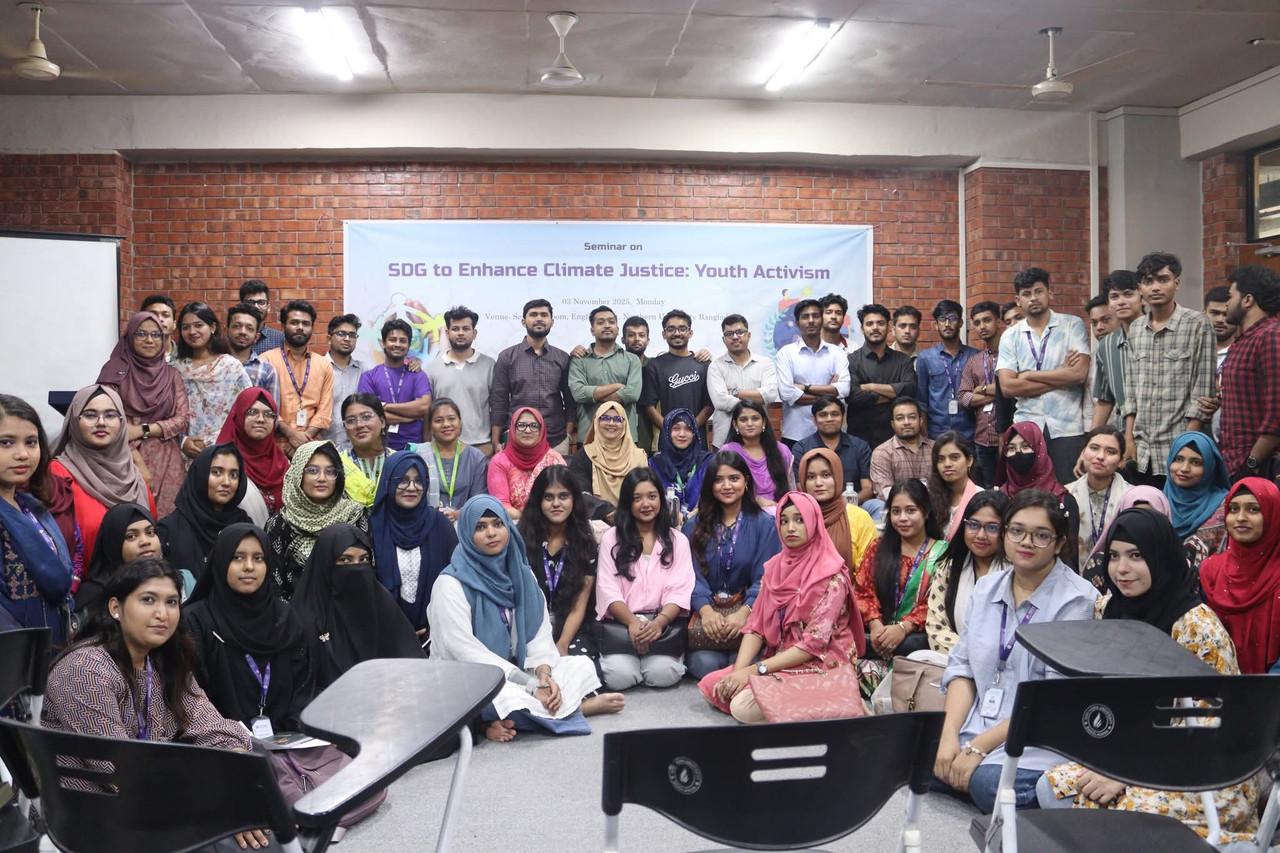
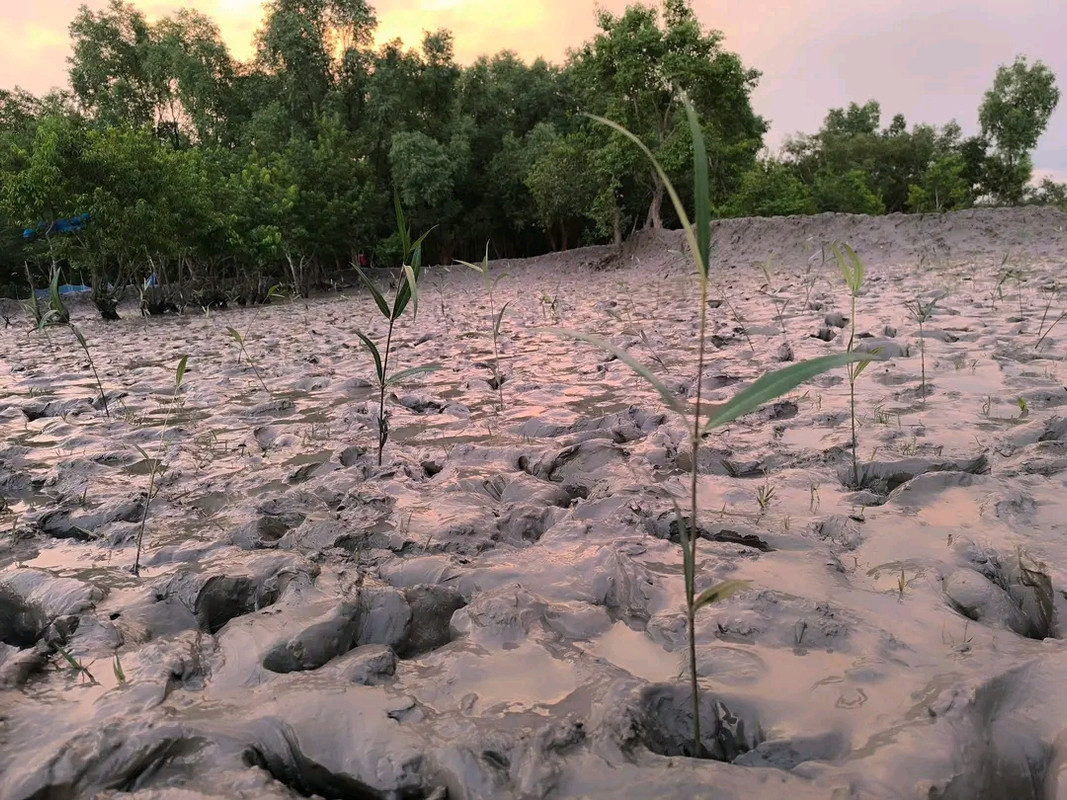
Mangrove ecosystems are recognized globally as critical climate solutions. They protect coastlines more effectively than concrete structures, store 3-5 times more carbon per area than terrestrial forests, support biodiversity crucial for food security and livelihoods, and adapt naturally to changing conditions. Yet Bangladesh has lost significant mangrove coverage outside the Sundarbans due to development pressures, aquaculture expansion, and lack of protection. Community restoration efforts like BINDU's reverse this trend. Women's leadership in climate action is both necessary and effective. Research shows women often take more sustainable resource management approaches, prioritize community welfare in decision-making, demonstrate strong commitment to intergenerational equity, and build inclusive coalitions across social groups. Yet women remain underrepresented in climate policy and funding. Projects like Empower demonstrate that when given resources and support, women deliver tangible climate resilience outcomes. Coastal Bangladesh faces existential threats. Sea level rise projections indicate significant land loss by 2050, potentially displacing millions. Cyclone intensity is increasing with climate change. Saltwater intrusion is making agriculture increasingly difficult. Without aggressive adaptation measures, coastal districts like Satkhira face humanitarian and economic catastrophes. Nature-based solutions like mangrove restoration, led by empowered communities, offer hope that resilience is possible. Scaling up challenges remain significant. Land availability for restoration is limited by competing uses, funding for community projects is insufficient relative to needs, technical knowledge about optimal planting techniques requires spreading, policy support for community-led conservation needs strengthening, and long-term maintenance of restored areas requires sustained commitment. Yet each successful project like Padmapukur demonstrates feasibility and builds momentum for expansion. The symbolism resonates beyond Satkhira. Women in green vests planting mangroves represent a broader movement of grassroots climate action across Bangladesh and globally. They embody the principle that those most affected by climate change must lead solutions. They prove that empowerment and environmental protection reinforce each other. And they inspire others – in neighboring villages, in coastal communities worldwide – to take similar action. Monitoring and evaluation will track the mangroves' survival and growth, community perceptions of benefits and challenges, women's reported empowerment and skill development, and environmental indicators like erosion rates and biodiversity. This data informs adaptive management and demonstrates impact to funders and policymakers, building the case for expanded support. Integration with livelihoods ensures economic sustainability. As mangroves mature, they can support sustainable harvesting of fish, crabs, and other resources. Honey production from mangrove flowers is a potential income source. Ecotourism showcasing restoration efforts could generate revenue. These economic benefits create incentives for long-term protection and stewardship. Next steps for BINDU include expanding mangrove planting to other vulnerable sites in Satkhira, training more women in restoration techniques and leadership, documenting and sharing lessons learned with other organizations, advocating for policy support and funding for community-led coastal adaptation, and building networks connecting women's groups across climate-vulnerable regions.
Join the conversation and share your thoughts!
Be the first to share your thoughts!